Why Extruded Silicone Rubber Is the Perfect Fit for Demanding Applications
Introduction to Extruded Silicone Rubber
In today’s fast-paced manufacturing environment, the demand for durable, flexible, and high-performance materials is greater than ever. Among the many elastomers available, extruded silicone rubber stands out for its superior performance under pressure, temperature extremes, and chemical exposure. It’s no wonder that industries from healthcare to aerospace rely on this versatile material. But what makes extruded silicone rubber so reliable—and why should you consider it for your next project?
Key Properties of Extruded Silicone Rubber
Temperature Resistance
Extruded silicone rubber is engineered to withstand a wide temperature range, typically from -60°C to 230°C. This allows it to function reliably in both cryogenic environments and high-heat settings such as engine bays, sterilization chambers, or industrial ovens. Unlike many other materials that degrade over time due to thermal cycling, silicone maintains structural integrity and elasticity.
Flexibility and Elasticity
One of the reasons extruded silicone rubber is so widely used is its excellent flexibility. Whether it’s used in static or dynamic applications, the material can bend, compress, and stretch without losing shape or strength. This elasticity reduces wear and tear on components, especially in applications with frequent motion or vibration.
Chemical Resistance
Another standout property is its ability to resist oils, solvents, and most acids and bases. This resistance makes extruded silicone rubber especially useful in the medical, food, and industrial sectors, where cleanliness and long-term durability are critical. UV, ozone, and weather resistance further add to its long-life performance.
Applications of Extruded Silicone Rubber
Medical-Grade Silicone Rubber
Medical-grade extruded silicone rubber plays a vital role in life-saving equipment. It is non-reactive, non-toxic, and biocompatible, which means it can safely interact with bodily tissues and fluids. Common uses include peristaltic pump tubing, gaskets for medical devices, and respiratory equipment. All materials are processed under strict quality controls to meet FDA and ISO 10993 standards.
Food-Grade Silicone Rubber
In the food and beverage industry, safety and compliance are non-negotiable. Food-grade silicone rubber is FDA-approved and designed to withstand hot and cold processes without leaching or absorbing flavors. From milk dispensers to baking equipment and beverage tubing, its smooth surface and microbial resistance make it the material of choice for hygienic processing.
Industrial Applications
Extruded silicone rubber is used in countless industrial applications where traditional rubbers fall short. These include electrical insulation, weather seals, gaskets, vibration isolators, and flame-retardant profiles. Its ability to remain stable in harsh environments helps minimize maintenance and maximize uptime.
Customization Options
Custom Extruded Silicone Rubber
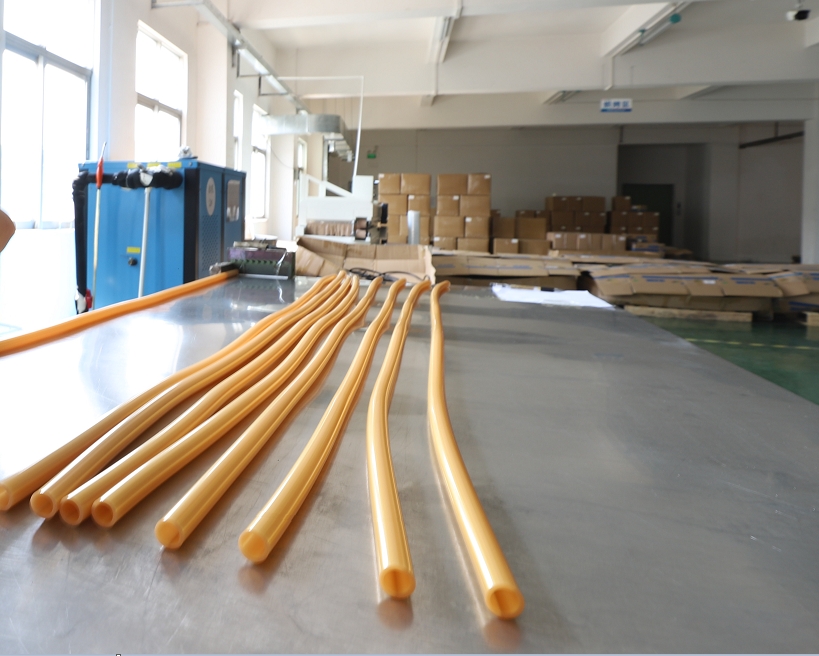
No two projects are the same, which is why custom extruded silicone rubber solutions are so valuable. Manufacturers can select from various colors, durometers (ranging from soft to firm), shapes, and tolerances to meet specific performance and design requirements. Whether you need a co-extruded profile, hollow tubing, or multiple-cavity designs, customization ensures optimal fit and function.
Custom Extruded Solid Silicone Rubber
Solid silicone rubber is ideal for high-strength applications that require dimensional stability and tight tolerances. Custom extruded solid silicone can be formulated for electrical insulation, pressure seals, or even flame-resistance. These parts are commonly found in aerospace and electronics, where performance failures are not an option.
The Silicone Rubber Extrusion Process
Overview of the Process
Extrusion involves pushing uncured silicone rubber through a custom die to create a continuous shape. The shape is then heat-cured in a tunnel oven or autoclave, depending on the application. This process allows for high precision and scalability, producing everything from medical tubing to large industrial profiles with minimal material waste.
Benefits of the Extrusion Process
The silicone rubber extrusion process is not only efficient but also adaptable. It allows for quick tooling changes, consistent cross-sectional geometries, and a wide range of profiles—making it ideal for both low- and high-volume runs. Because the process avoids seams and joints, the finished parts are more durable and reliable.
Conclusion
Summary of Key Benefits
Extruded silicone rubber offers a powerful combination of temperature resistance, flexibility, chemical stability, and customizability. Its ability to meet strict medical and food-grade standards, alongside its performance in rugged industrial environments, makes it an invaluable material for engineers and designers.
Call to Action
Ready to take your product to the next level? Our high-quality custom extruded silicone rubber solutions are trusted by clients across the U.S. Contact our expert team today to discuss your project requirements and get a free consultation.