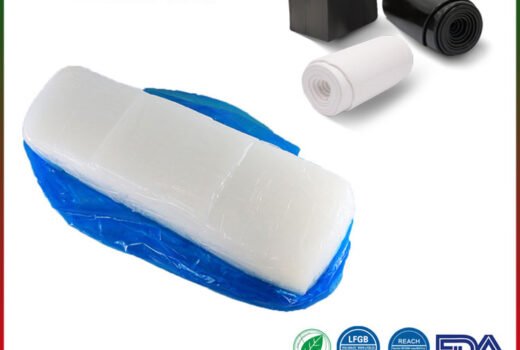

Choosing an HTV silicone rubber grade starts with the part you need to manufacture, not simply with the Shore A value shown on a catalog page. This guide outlines a repeatable approach to comparing solid silicone rubber materials for industrial processing.
1. Identify the processing method
High-consistency silicone rubber (also called HCR or HTV in many commercial contexts) is available in compounds intended for different processes. Extrusion, compression molding and other routes impose different requirements on handling, compound consistency and curing. Start by recording your planned process, equipment and relevant processing limits.
For extruded sections such as profiles and tubing, pay attention to dimensional control, surface finish and the chosen curing route. For molded components, consider part thickness, tool design, cycle conditions and the target final properties. Technical suitability should be evaluated for the actual grade rather than inferred from the material family.
2. Put hardness in context
Shore A hardness is useful for comparing the resistance of elastomers to indentation, but it is not a complete description of sealing behavior, flexibility or durability. Two grades at the same nominal hardness can have different tensile strength, elongation, tear resistance and compression-set performance.
Specify the hardness range that matters to the finished part, then review the other properties alongside it. Measurements are meaningful only with their test methods and conditions.
3. Read the complete technical data sheet
- Confirm the exact product grade and revision date of the TDS.
- Check hardness, tensile strength, elongation and tear data together.
- Identify cure conditions and whether properties describe uncured or cured material.
- Confirm the units and test method attached to each reported value.
- Verify whether the supplier has the SDS or grade-specific documentation required for your use.
4. Check the intended operating environment
A finished silicone part can see heat, outdoor exposure, oils, cleaning agents, compression, repeated flexing or contact with other materials. Describe those conditions in the inquiry. General statements about silicone performance do not establish the suitability of a particular compound for a particular component.
5. Validate with a production trial
Use the selected grade in a representative process trial. Measure the actual finished part and document the cure conditions. Supplier datasheets are a starting point, not a replacement for qualification in your application.
Questions to send with an RFQ
Tell the supplier your process, target hardness range, main performance requirements, expected volume and documentation needs. If you are replacing a material, provide the current grade and the changes you are trying to achieve.
Compare available HTV grades
Browse the current HTV silicone materials, then send your processing and specification requirements for a grade-specific review.